LIVING IN GRATITUDE
The Leaders Who Struggle Well
How leaders carry pressure doesn’t just shape them; it shapes everyone around them. Over time, teams learn to carry struggle the same way their leaders do.
A reflection on struggle, leadership, and the environments we create for others.
Over the past few weeks we’ve been exploring what it means to struggle well.
The weight many leaders quietly carry.
The cost of carrying it alone.
The surprising ways struggle can shape us.
And the relief that comes when that weight is shared.
But something else becomes clear when you step back.
Pressure doesn’t just test leaders. It reveals the environments we create for others.
The Leadership Mirror
Because people are always watching how leaders carry what is hard.
And over time, they begin to carry it the same way.
If you, as a leader, struggle silently, your team learns to stay quiet when they struggle.
If you, as a leader, absorb everything alone, others assume they should too.
If you, as a leader, pretend everything is fine, people learn to hide what isn’t.
But when you, as a leader, carry pressure differently— with honesty, with presence, with openness—something else begins to form.
People exhale.
Trust deepens.
Shared responsibility grows.
Staying Oriented in The Struggle
And there is another posture that quietly shapes all of this.
One that is often overlooked in leadership conversations.
Gratitude.
Not as a performance.
Not as a way to minimize what is hard.
But as a way of staying oriented in the middle of struggle.
Gratitude does not remove the weight. But it changes how you carry it.
It keeps you connected to what is still present.
What is still meaningful.
Sho is still with you.
Even when the situation itself has not changed.
Living IN Gratitude is not about denying what is hard. It's about remaining open to what is still present within it.
In that way, gratitude becomes more than a feeling.
It becomes a practice.
A way of remaining open when it would be easier to close.
A way of noticing what is still good when everything feels heavy.
A way of leading that reminds people:
We can be honest about what is hard without losing sight of what matters.
From Posture to Leadership
And when leaders carry pressure with that kind of posture—
honest, open, grounded in gratitude—
you begin shaping environments where people can grow.
Which leads to a deeper realization about leadership itself.
Leadership exists to cultivate people.
Not simply to drive performance.
Not simply to manage outcomes.
But to create environments where people can grow — even in seasons of pressure. Those don't seem to be ending anytime soon!
When leaders cultivate people, something remarkable begins to happen.
Contribution rises.
Ownership expands.
Creativity multiplies.
Not because the pressure has vanished. But because people are learning how to carry it differently.
Together.
This changes the way we think about leadership.
Because leadership is not just about what gets done.
It’s about what is formed in people along the way.
And struggle, when carried well, becomes one of the primary places where that formation happens.
Our Next Conversation
Over the coming weeks, I’ll be exploring this idea more deeply.
What does it actually look like to cultivate people?
What kind of environments help people grow?
And how do leaders shape those environments when pressure is real?
Before we go there, sit with this for a moment:
What kind of environment does your leadership create when pressure rises?
And perhaps just as important:
What would it look like to carry what is hard with both honesty… and gratitude?
Because the real question isn’t whether you will carry hard things.
The real question is how you will carry them — and who you become in the process.
I'M GRATEFUL FOR YOU!
Struggling Well Is Rarely a Solo Act
Struggling well is rarely something we do alone. But many leaders carry more than they need to simply because no one can see what they’re carrying.
A 5-part reflection on struggle, leadership, and the quiet work of becoming more human under pressure.
What are you carrying right now?
And who knows about it?
Most people around you are carrying something.
Some of it visible. Much of it not.
And when it’s not visible, it’s easy to assume we’re meant to carry it alone.
Once People Know
Have you ever noticed how quickly people step in when they can see it?
Meals appear.
Schedules shift.
People carry pieces of the weight.
But only after it becomes visible. Until then, most of us carry more than anyone around us would ever ask us to.
My friend and co-creator of this series, Wade Mitzel experienced that tension in a very real way.
His daughter had undergone spinal surgery and suffered a spinal cord stroke. The road ahead was uncertain.

We’ve Got You”: The Moment Everything Shifted -- Struggle Well Part 4
At any moment, he might need to leave work with little notice to get her care somewhere else in the country.
So he sent an email few leaders want to send.
“I had to send a very hard email… letting my team know I might have to leave quickly. That was hard. It felt like admitting I might not fulfill my duties or might let someone down.But when I told them, they all said the same thing: ‘Wade, we’ve got you.’ If I hadn’t given them the opportunity to see my struggle, they wouldn’t have been able to come alongside me… and I would have missed that too.”
Don't Go It Alone
That moment has stayed with me. Struggling well is rarely a solo act.
Sometimes it begins with something simple: Letting people see what you’re carrying.
If you lead, you’ve probably felt the pull to carry more.
Protect the team.
Hold things together.
Keep moving.
From the outside, that can look strong.
Inside, it can become isolating.
But something shifts when struggle becomes visible.
The weight doesn’t disappear.
But it becomes shareable.
Lessons Learned IN the Struggle
You already know this.
If you’ve ever walked with someone through a hard season…
You didn’t need the right words.
You didn’t need to fix it.
Your presence was enough.
And something changes when you experience that for yourself.
You listen differently.
You notice more.
You make it safer for others to be honest about what they’re carrying.
Before moving on, sit with this for a moment:
Who in your life knows what you’re really carrying right now? What's needed for you to open up and share it with someone...this week?
Struggle Can Form You: If You Let It Deepen You
Some struggles leave us drained, while others quietly shape who we become. The difference isn’t the pressure—it’s how we carry it.
A five-part reflection on struggle, leadership, and the quiet work of becoming more human under pressure.
Have you ever noticed how some people come through hard seasons different?
Not just relieved.
Different.
Quieter.
Wiser.
More patient.
Almost as if something in the struggle shaped them.
Yet other struggles seem to do the opposite.
They drain people.
Narrow them.
Leave them more guarded than before.
At first glance, those struggles can look exactly the same.
Both involve pressure.
Both involve uncertainty.
Both stretch us beyond what feels comfortable.
But over time, they shape us in very different ways.
In our conversation, Wade Mitzel (whom you met here over the last two weeks) said something that helped me see that difference more clearly than I ever had before.
“When we choose to struggle well, we don’t just endure — we grow.”
We don’t just endure.
We grow.
That sentence grabbed me.
And it’s lingered with me.
Because most of us assume the goal of difficult seasons is simply to survive them.
Push through.
Get past them.
Hold on until things improve.
But struggling well suggests something different.
That the way we carry difficulty can shape who we become.
That insight changed the way I think about struggle.
Think about the leaders who have shaped you most.
Rarely are they the ones who had the easiest path.
More often they are people who walked through difficult seasons in ways that made them more:
Present
Patient
Grounded
Human
Something in the struggle refined them.
Not perfectly.
But noticeably.
Your Calling Doesn’t Change in Hard Seasons
When Wade reflected on what this season has been teaching him, he described something deeper than resilience.
“Through the difficulties in my personal life, it allowed me to listen… to see the importance of what that mission is for me and go full force into that.
Work isn’t easy when you’re going through hard things — when you get that cancer diagnosis, when you lose a loved one — but it really focuses you on what your purpose is and where you need to put your time.
I love this quote: Even on the hardest day, your calling is unchanged, and you’re the right person for it.
These struggles come like waves… but they don’t change who we are or the purpose in our life.
It’s a hard lesson to learn. And honestly, I’m still learning it every day.”
That insight shifts the way we understand struggle.
Because the hardest seasons of life don’t just test us.
They reveal us.
They reveal where we are stretched thin.
Where our patience is fragile.
Where our priorities need reordering.
And sometimes they reveal strengths we didn’t know we carried.
Patience.
Perspective.
Compassion.
Humility.
Even gratitude.
Not gratitude for the struggle itself.
But gratitude for the meaning that can emerge within it.
This realization changes the question we ask when life becomes difficult.
Instead of asking:
How do I get through this?
We begin asking:
Who am I becoming as I carry this?
That shift is where hope begins.
Because the hardest seasons of life no longer have the final word.
They become part of the quiet work of formation.
Struggle doesn’t disappear when we acknowledge it.
But it can shape us.
Deepen us.
Clarify what matters most.
And sometimes remind us of something easy to forget.
That even on the hardest days…
our calling remains unchanged.
Some struggles don’t just test us.
They shape us.
Before moving on, sit with this question for a moment:
Where might this season of pressure be shaping you more than you realized?
The Cost of Silent Struggle
Many leaders carry pressure quietly, believing strength means handling it alone. But silent struggle slowly erodes perspective, connection, and purpose.
Last week I asked a simple question:
When sustained pressure builds, what is your first instinct?
56% of leaders said:
Stay quiet and move on.
That response didn’t surprise me.
If you’ve spent time around capable leaders, you’ve probably seen the pattern.
Pressure builds.
And strong people absorb it.
They keep showing up.
They keep delivering.
They keep carrying what no one else sees.
From the outside, it looks like strength.
Inside, something slowly narrows.
Patience.
Perspective.
Sometimes even purpose.
I’ve watched that happen to more than one capable leader.
Especially the one who meets me in the mirror.
My friend Wade Mitzel — the one whose story we began exploring last week — knows that pattern well.
In our conversation, he told me about an email he had to send his team.
His daughter had undergone spinal surgery and suffered a spinal cord stroke. The road ahead was uncertain, and Wade realized something he hadn’t wanted to admit:
At any moment, he might have to step away from work and take her across the country for treatment.
So he wrote to his team and told them the truth.
He let them know he might need to leave quickly.
That he might not be able to fulfill everything expected of him for a season.
For many leaders, that kind of message feels almost impossible to send.
Because it breaks the pattern.
The pattern of staying quiet.
The pattern of carrying it alone.
But what happened next surprised him.
Instead of disappointment, his team responded with something simple:
“We’ve got you.”
Sometimes the first step toward struggling well is letting people see that you’re struggling at all.
Later in our conversation, I asked Wade what struggling poorly looks like.
He didn’t hesitate.
“When I struggle poorly, it’s the poor-me mindset. I isolate myself. I don’t accept or seek support… and I lose my purpose.”
He began with an admission many leaders avoid:
“Let me first say that I struggle poorly at times as well.”
That kind of honesty is rare in leadership conversations.
Isolation is the quiet signature of struggling poorly.
It doesn’t usually look dramatic.
More often it looks responsible.
Professional.
Composed.
But slowly, something begins to erode.
Perspective narrows.
Relationships grow thinner.
Purpose becomes harder to see.
Organizations rarely fall apart because leaders struggle.
Struggle is inevitable.
What slowly erodes teams is how that struggle is carried.
When pressure stays hidden, people begin to assume they’re supposed to carry their own weight alone too.
Not because anyone said so.
But because that’s the pattern they see.
And over time, silence spreads.
Struggling well doesn’t mean eliminating difficulty.
It begins with something much simpler.
Honesty.
Not oversharing.
Not collapsing publicly.
Just telling the truth about the weight you’re carrying.
That’s what Wade did when he sent that email.
And in doing so, he created something many leaders don’t realize they’re allowed to create.
Space.
Space for others to step in.
Space for people to support one another.
Space for leadership to remain human.
Struggle doesn’t disappear when we acknowledge it.
But it does change shape.
Instead of narrowing us, it can connect us.
Instead of isolating us, it can deepen trust.
Next week we’ll explore a realization that changed how I think about difficult seasons.
That the way we carry struggle doesn’t just determine whether we survive it.
It shapes who we become.
But before we go there, sit with this question for a moment:
Where in your life or leadership have you been quietly carrying something that was never meant to be carried alone?
Are You Mistaking Weight for Failure?
Have you ever heard a phrase that immediately took root in your mind? Not because it was clever. But because it felt true.
Wade Mitzel | Struggle Well
Have you ever heard a phrase that immediately took root in your mind?
Not because it was clever.
But because it felt true.
Today we begin a four-part exploration of a phrase that did exactly that for me.
On a Tuesday morning in mid-February, my friend Wade Mitzel wrote a post.
By Wednesday, I couldn’t stop thinking about it.
By Thursday, we were on a call unpacking two words I had never heard paired together before:
Struggle well.
The more we talked, the more I realized this wasn’t a slogan.
It was a distinction.
What if you’re not failing?
What if this season is simply heavy?
You’re still showing up.
Still carrying responsibility.
Still answering the email.
Still making the call.
Nothing is on fire.
And yet something feels different.
Not sharp enough to alarm you.
Not loud enough to name easily.
Just… constant.
A weight that doesn’t spike.
It settles.
And because you’re capable,
you adjust.
You compensate.
You push a little longer.
You carry a little more.
From the outside, it still looks strong.
Inside, it takes more effort than it used to.
Most of us are not falling apart.
We are simply carrying more than we were meant to carry alone.
Last week, I asked a simple question in a survey:
When sustained pressure builds in leadership or life, what is your first instinctive response?
Here’s what you said:
Carry it alone — 11%
Push harder — 15%
Stay quiet & move on — 56%
Ask for support — 18%
More than half of you chose:
Stay quiet and move on.
Not collapse.
Not complain.
Not even push harder.
Just keep moving.
Struggle rarely announces itself.
It absorbs.
It hides in competence.
It disguises itself as professionalism.
That’s the terrain we’re standing on.
Wade leads the University of Louisville Physicians Group. He’s also a dad walking through a deeply personal season of uncertainty with his daughter.
In our conversation — and in a short video he recorded — he said something I haven’t stopped replaying:
“Leadership is not only about strategy and performance, it’s about presence.”
Presence when outcomes are uncertain.
Presence when people carry silent burdens.
Presence when you are carrying one yourself.
▶︎ Watch Wade share this in his own words.
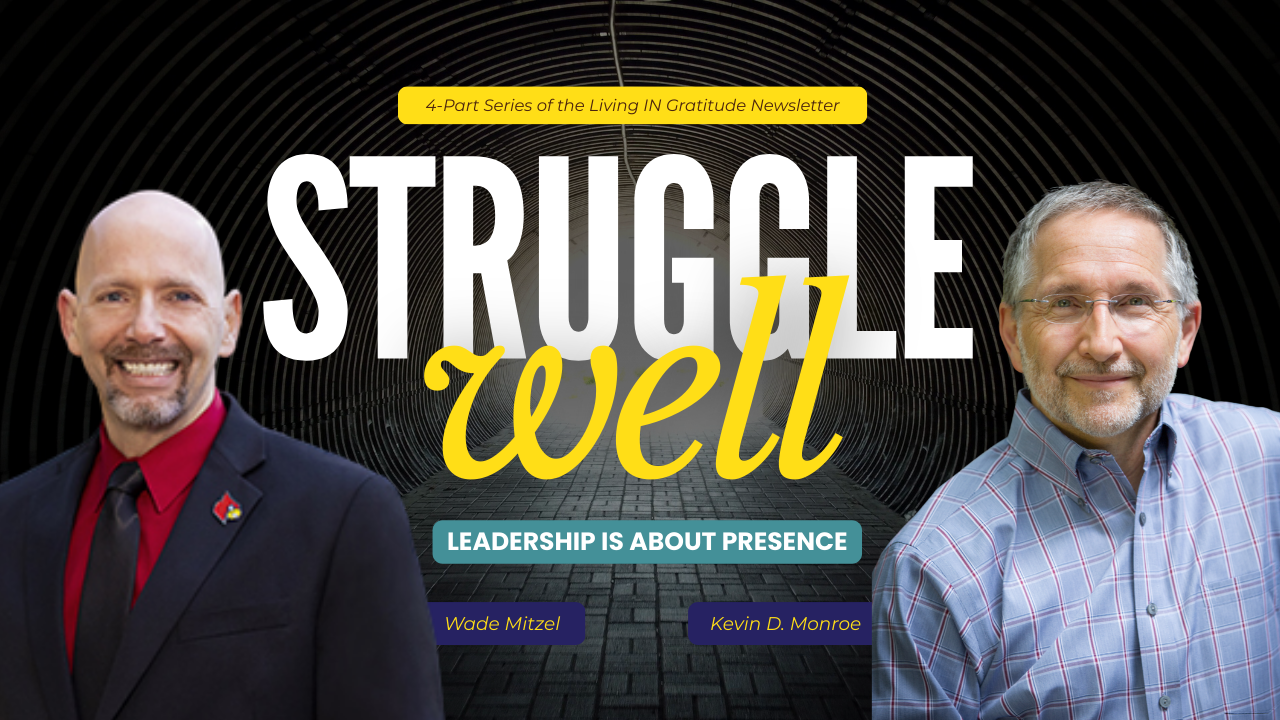
Struggle Well: Leadership Is About Presence
He also said something simpler, but just as disruptive:
“When you hire a person… you hire the whole person.”
In our conversation, Wade unpacked what that really means.
We don’t hire fragments.
We don’t lead fragments.
We don’t live fragmented lives.
And yet many of us try.
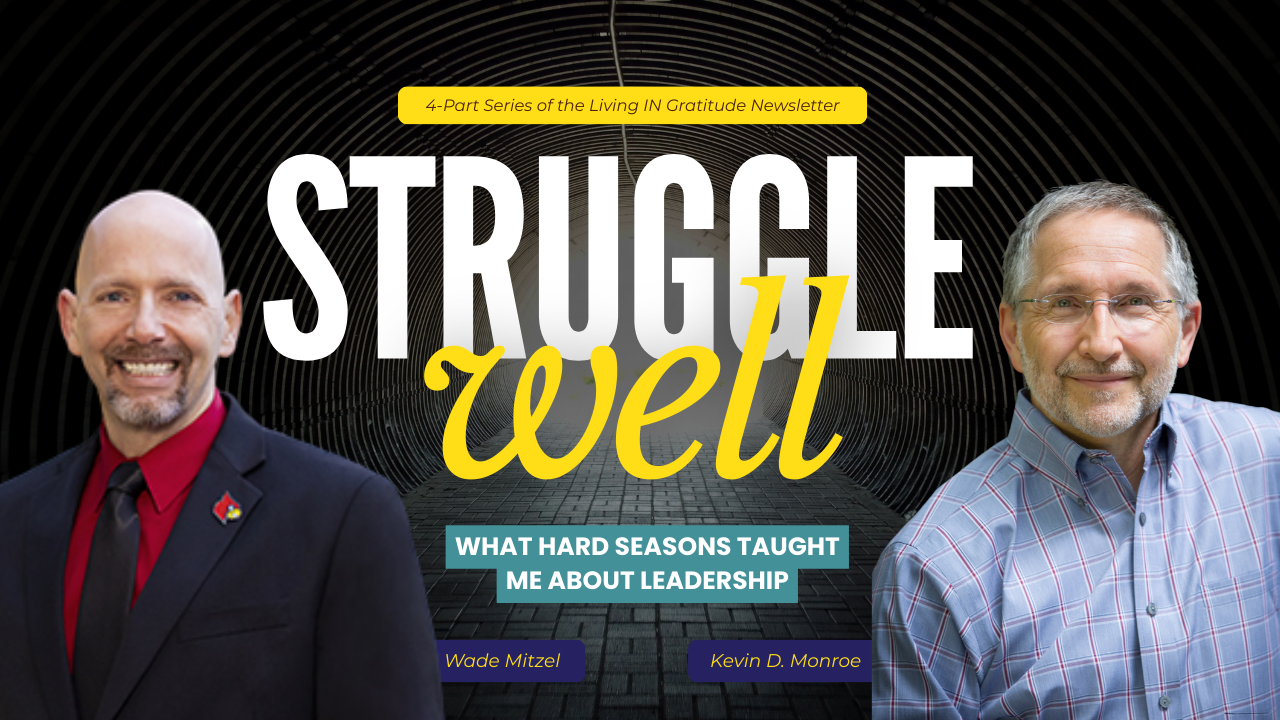
Struggle Well as a Leader: What Hard Seasons Taught Me About Presence
We try to keep the personal weight from touching the professional role.
We try to prove that leadership means composure without cost.
But weight has a way of showing up anyway.
It shows up in shorter patience.
In thinner margins.
In quiet fatigue that doesn’t fully leave.
It’s not only the people at the top of the org chart feeling the pressure.
But often that’s where it starts.
And it trickles down.
Expectations compress.
Timelines tighten.
Margins narrow.
Before long, everyone is wearing busy and weary as badges of honor.
People are carrying more than anyone sees…
until “suddenly” they cannot.
Collapse always looks sudden.
It rarely is.
The real question may not be:
“Are you struggling?”
It may be: How are you struggling?
Because there is a way to struggle that narrows you.
And there is a way to struggle that deepens you.
There is a way to carry pressure that slowly hardens you.
And there is a way to carry it that forms you.
Wade and I are still exploring that distinction.
We don’t have it mastered.
But we are convinced of this:
Struggle is not proof of failure.
It is often proof of responsibility.
And perhaps the first step toward struggling well
is simply telling the truth about the weight we’re carrying.
So as you move through this week, consider this:
Where has pressure become so normal
that you no longer call it what it is?
You don’t need to fix it.
You don’t need to solve it.
Just name it.
That may be where struggling well begins.
And this month, we’ll keep exploring what that could mean — together.
Will you take this month to notice how you’re carrying the weight?

Living IN Gratitude: More Than a Manifesto
Have you noticed yourself responding differently lately? It may not be anything dramatic. You may be the only one who has noticed. And somewhere along the way, something became clear: Living IN Gratitude is more than a practice. It is more than a mindset. It is even more than a manifesto.
Have you noticed yourself responding differently lately?
It may not be anything dramatic. You may be the only one who has noticed.
Perhaps you’ve found it easier to pause.
Leaning in to listen more closely.
Carrying pressure a little differently than you once did.
Over these past two months, we have been practicing something together.
Not through instruction. Not through performance. But through attention.
And somewhere along the way, something became clear:
Living IN Gratitude is more than a practice. It is more than a mindset. It is even more than a manifesto. It is a way of being.
When Language Catches Up With Experience
Sometimes we name things only after we have begun living them.
You recognize a shift before you can explain it.
How you listen. How you lead. How you carry responsibility. How you return to what matters when life feels crowded or uncertain.
Only later do you realize:
Something in me has changed.
That is what Living IN Gratitude has become for me and, I suspect, for many of you reading these reflections.
Not a declaration of belief.
A shared orientation.
The Living IN Gratitude Orientation
Over time, certain truths have revealed themselves again and again.
Not rules. Not requirements. Simply observations about what seems to hold true when gratitude becomes lived rather than discussed.
Gratitude is a posture, not a mood. It remains available even when circumstances are unresolved.
Gratitude begins with pausing. Because we cannot appreciate what we rush past.
Pausing allows us to notice. Before appreciation can be expressed, something must first be truly seen.
Gratitude becomes real through expression. What remains unspoken rarely transforms relationships.
Gratitude is relational by nature. Its power multiplies when shared.
Gratitude does not remove pressure. It reshapes who we become inside it.
Gratitude influences leadership. It changes how we decide, repair, listen, and lead.
Gratitude is practiced in ordinary moments. Rarely dramatic. Often quiet. Always human.
These are not aspirations. They are recognitions.
Why Living IN Gratitude Is More Than a Manifesto
A manifesto states what we believe.
Living IN Gratitude describes how we live.
It is not something we sign onto. It is something we grow into.
And if this language feels familiar, it may be because you have already been practicing it long before it had a name.
Completing This Season
These past two months have been about grounding ourselves.
Learning to return. Learning to pause. Learning to notice. Learning to share gratitude in ways that shape real life.
This has been foundation work.
And foundations matter because life does not grow easier simply because we choose gratitude.
Pressure still comes. Uncertainty still arrives. Loss still visits. Leadership remains demanding. Life remains beautifully complicated.
Which raises the next honest question.
Turning the Page
As we close this opening season together, something worth noticing has happened.
We did not set out to master gratitude.
We simply practiced returning to it.
In small moments. Under real pressure. Inside ordinary days.
And perhaps what has changed is not our circumstances.
Perhaps what has changed is how we meet them.
Living IN Gratitude has never been preparation for easier lives.
It is preparation for honest ones.
Because gratitude does not remove struggle. It changes how we move through it.
Which brings us to the question waiting just ahead:
What does it mean to live with gratitude when life feels genuinely heavy?
Beginning in March, we will explore that together.
Not how to avoid struggle. Not how to rush past difficulty. But how to struggle well.
How to carry responsibility without losing ourselves. How to remain human under pressure. How gratitude becomes not escape from hardship, but companion within it.
For now, simply notice:
Where have you already begun living differently?
A conversation handled with more presence
A decision shaped by clarity rather than urgency
A relationship strengthened through expression
A moment where gratitude changed how you carried pressure
You may be further along than you realize.
Thank you for walking this opening season with me.
I’m grateful for you.
Living IN Gratitude Choosing Gratitude Daily in the Life We’re Living
A weekly reflection exploring how gratitude shapes leadership, relationships, and the way we carry real life under real pressure.

Gratitude is Better Together
Have you ever tried to carry something heavy… without telling anyone how heavy it really was?
Have you ever tried to carry something heavy… without telling anyone how heavy it really was?
From the outside, everything looks normal. You keep leading. Keep deciding. Keep showing up.
But inside, the weight grows quieter and heavier at the same time.
And what makes it hardest isn’t always the pressure itself. It’s the feeling that you’re carrying it alone.
Over the past few weeks, we’ve been naming something simple and honest:
Pressure has a way of shrinking us. Gratitude is how we return. How we expand.
And last week, we explored where that return actually lives — not in big dramatic changes, but in small moments:
Before you respond,
Inside a conversation,
After a decision.
Small pauses. Quiet breaths. Ordinary choices that slowly reshape how you live and lead.
But there’s something important we haven’t named yet.
When Gratitude Stays Private, It Shrinks
This may be one of the greatest shortcomings in how gratitude is often practiced and taught.
Around the world, gratitude is often framed as a personal discipline — something you journal, reflect on, or hold quietly inside.
And there’s nothing wrong with those practices. I do them daily. They matter. They help. They begin something real.
But if gratitude never leaves the page… never enters conversation… never becomes spoken, shared, or witnessed…it quietly loses strength.
What was meant to be relational gets reduced to individual.
What was meant to be lived together gets practiced alone.
And over time, gratitude that stays private cannot fully carry the weight we ask it to hold.
This isn’t criticism. It’s an invitation to something more whole.
Shared Gratitude Changes the Climate of Leadership
Because the moment gratitude is spoken out loud, something subtle begins to shift.
Honesty deepens. Pressure softens. Trust grows. People feel seen. Heard. Valued.
And leaders often notice something surprising: You don’t have to carry everything alone for people to feel strong.
In fact, the opposite is often true.
When you as a leader practices honest gratitude— not forced positivity, but real noticing and real appreciation — something begins to ripple through your team.
Conversations change. Tension lowers. Belonging increases. Courage quietly rises.
Not dramatically. But unmistakably.
Gratitude, when shared, doesn’t just comfort people. It reshapes culture.
If Gratitude Is Meant to Be Shared, It Needs Somewhere to Live
Sometimes that place is simple:
a trusted friendship,
a small circle of leaders,
a team learning a more human way to work together.
And sometimes, it becomes something more intentional.
Over time, I began to realize that if gratitude was truly meant to be lived— not just understood— It needs a space where people can practice it together in the middle of real leadership and real pressure.
Not as a program. Not as performance. Not as another place to prove anything.
Just a grounded space where honesty is welcome, pressure can be named, small moments can be noticed, and gratitude can be spoken out loud without pretending everything is fine.
That realization is what led to the creation of The Grateful Business Alliance.
The GBA is not the only place gratitude can be lived.
Just one place where it is being practiced on purpose— by entrepreneurs and leaders who are done carrying everything alone and are learning to live and lead from gratitude as a way of life.
The Invitation
If you lead a team, this invitation reaches even further than community.
Because the deeper question is this:
What would change if gratitude became a shared practice your people experience — not just something you believed?
What might shift in:
How your team speaks to one another,
How pressure is carried,
How wins are noticed,
How hard moments are held.
This is where gratitude stops being an idea and begins to become an environment.
If you lead a team, will you find one practical way to infuse gratitude into conversations and meetings this week?
Open a meeting by reflecting on good things that have happened since the last time you were together as a team.
Or invite people to share how someone went above and beyond to help them.
Send a text or note to express specific appreciation to someone for who they are or what they contribute.
Find a moment in 1:1 conversations for genuine gratitude and appreciation.
Please post a comment here of what happens when you do. Or send me a DM. Last week, a leader held an important meeting and called to brainstorm ideas on how to include gratitude in the gathering. Starting with a gratitude moment helped! It created connection and provided room to breathe.
If you desire to be part of a community where living and leading with gratitude are encouraged and celebrated.
Not more content.
Not more noise.
Just a place— or a people— where gratitude is real.
Please explore the Grateful Business Alliance or DM to set a time to talk.
Next week, we’ll name more clearly what it means to Live IN Gratitude not as a concept… but as a shared way of being.
I’m grateful for you. 🌱

Gratitude in the Middle of the Moment
Have you ever noticed how quickly gratitude can disappear in the middle of an ordinary day? Not in dramatic ways. In small ones. And most of the time… you don’t even notice the moment it slipped away.
Have you ever noticed how quickly gratitude can disappear in the middle of an ordinary day?
Not in dramatic ways. In small ones.
An email that frustrates you.
A meeting that runs long.
A decision you wish you didn’t have to make.
Pressure you carry home without saying a word.
And most of the time… you don’t even notice the moment it slipped away.
Last week, we named something simple and honest:
𝙋𝙧𝙚𝙨𝙨𝙪𝙧𝙚 𝙝𝙖𝙨 𝙖 𝙬𝙖𝙮 𝙤𝙛 𝙨𝙝𝙧𝙞𝙣𝙠𝙞𝙣𝙜 𝙪𝙨. 𝙂𝙧𝙖𝙩𝙞𝙩𝙪𝙙𝙚 𝙞𝙨 𝙝𝙤𝙬 𝙬𝙚 𝙧𝙚𝙩𝙪𝙧𝙣.
But an honest question follows:
𝙍𝙚𝙩𝙪𝙧𝙣… 𝙝𝙤𝙬?
Not in theory.
Not later, when everything settles down.
But in the middle of real leadership, real responsibility, and real life.
Because if gratitude only works in quiet moments, it won’t help you where you actually live.
Gratitude Lives in Micro-Moments
What I’m learning is this:
Gratitude rarely arrives as a grand gesture. More often, it appears as 𝐚 𝐬𝐦𝐚𝐥𝐥 𝐜𝐡𝐨𝐢𝐜𝐞 𝐢𝐧𝐬𝐢𝐝𝐞 𝐚𝐧 𝐨𝐫𝐝𝐢𝐧𝐚𝐫𝐲 𝐦𝐨𝐦𝐞𝐧𝐭.
The moment before you respond to an email that feels sharp.
The moment inside a conversation where tension is rising.
The moment after a hard decision, when second-guessing tries to take over.
These are the places where gratitude quietly waits.
Not loudly. Not dramatically. Just… patiently.
And when you notice it, something subtle begins to shift.
Your tone softens.
Your breathing slows.
Your thinking widens.
Your leadership becomes more human again.
Not perfect. Just present.
Before You Respond
There is often a tiny space between what happens and what we say next.
(That’s what Viktor Frankl taught us.)
Pressure tries to rush through that space. 𝐆𝐫𝐚𝐭𝐢𝐭𝐮𝐝𝐞 𝐭𝐞𝐚𝐜𝐡𝐞𝐬 𝐮𝐬 𝐭𝐨 𝐩𝐚𝐮𝐬𝐞 𝐢𝐧𝐬𝐢𝐝𝐞 𝐢𝐭.
Sometimes the most powerful leadership move is a deliberate pause and a single quiet breath before you say anything else.
Inside the Conversation
Do you ever get so focused on the problem that you lose sight of the person in front of you?
Gratitude doesn’t ignore difficulty. But it gently reminds you:
There is a human being here. Not just an issue to solve.
And that remembering changes how you listen, how you speak, and how the moment ends.
After the Decision
Leadership and life are full of decisions that don’t come with certainty.
Afterward, the mind loves to replay, second-guess, ruminate, and carry weight that can’t be changed.
Gratitude offers a different ending:
Not “Did I get this perfect?” But “What is still good, still true, still possible now?”
And that quiet shift lets you move forward without hardening inside.
The Quiet Truth Beneath It All
Gratitude isn’t something you practice outside leadership.
It is something that quietly reshapes who you are inside it.
Not all at once.
Not dramatically.
But moment by moment…
Choice by choice…
Breath by breath.
And over time, those small unseen choices become a different way of living.
Your Invitation This Week
Not a big change. Just a small, honest experiment.
Choose one ordinary moment each day this week:
Before you respond
Inside a conversation
After a decision
And simply ask: “What would gratitude look like right here?”
No performance.
No perfection.
Just noticing…
And one small choice
Followed by action.
That’s enough. It always has been.
Walking With Others
If you’re practicing this alongside others, here’s a question to explore together:
Where in your leadership, or life, do you most need a pause before you respond?
One sentence is enough. Honesty is enough. You don’t have to carry it alone.
If you try this practice this week, you may notice something unexpected.
Not just how gratitude changes moments— but how much easier it becomes when someone else is practicing it too.
Because gratitude was never meant to be carried in isolation.
It grows stronger when it’s shared, spoken, and lived alongside others who are learning the same quiet return.
We’ll explore that together next week.
I’m grateful for you. 🌱

When Pressure Rises, Gratitude Becomes a Practice
When pressure rises, gratitude becomes more than reflection. It becomes orientation. It becomes the way you stay human. The way you stay present. The way you remember what matters when everything feels loud.
Pressure has a way of shrinking us.
Can you remember a recent moment when it did that to you? When your thinking narrowed… your patience shortened… and your world got smaller?
And the scary part is, we often don’t notice it until we’re already living inside the shrink.
Pressure speeds up our thinking. Tightens our chest. Narrows our options. And quietly trains us to lead from urgency instead of wisdom.
That’s why pressure feels so personal, even when it isn’t.
It doesn’t just sit on your calendar. It gets inside your body. Inside your tone. Inside your decisions.
And if you’re building something… leading people… carrying responsibility… pressure isn’t an occasional visitor.
It’s a frequent companion.
But here’s what I’ve learned the hard way:
Gratitude isn’t something you do when pressure goes away. Gratitude is how you return when pressure takes over.
Not as a concept. Not as a motivational quote.
As a lived practice.
Because when pressure rises, gratitude becomes more than reflection. It becomes orientation.
It becomes the way you stay human. The way you stay present. The way you remember what matters when everything feels loud.
The Myth: “I’ll Practice Gratitude When Life Calms Down”
A lot of people believe gratitude belongs in the “after.”
After the deadline. After the decision. After the money stress lifts. After the season resolves.
But the truth is… the “after” rarely arrives.
And if we wait for calm before we practice gratitude, we end up living like this:
Always bracing
Always reacting
Always behind
Always carrying more than you can name
That’s not leadership. That’s survival. And you were made for more than survival.
The Shift: Gratitude as a Return
This is what Living IN Gratitude has come to mean for me:
Gratitude is not denial. It’s not pretending pressure isn’t real.
Gratitude is how we return to what is true… inside the life we’re actually living.
It’s the way we interrupt the spiral.
Not with fake positivity. But with presence.
The practice can be simple:
Pause: Long enough to stop the momentum.
Notice: What’s still good, still real, still present.
Express: Gratitude out loud, in writing, in action.
Not because everything is okay. But because something is still worthy of attention.
Where Gratitude Meets Leadership
Here’s the part I don’t want you to miss:
Gratitude doesn’t just change how you feel. It changes how you lead.
It changes:
How you speak to your team
How you hold tension in conversations
How you make decisions under stress
How you carry responsibility without becoming hardened
How you go home at the end of the day
It doesn’t remove pressure. But it changes who you are inside it.
A Question Worth Sitting With
So here’s a simple, honest question for this week:
Where is pressure trying to take over your leadership right now?
And right beside it:
What would it look like to return to gratitude there?
Not in general.
Specifically.
In the decision. In the conversation. In the moment you’re tempted to rush, react, or shut down.
Your Invitation (This Week)
Choose one pressure-point you’re carrying right now.
And practice this one sentence each day:
“I’m feeling pressure about ___… and I’m choosing gratitude by noticing ___.”
You don’t need a perfect answer. You just need an honest one.
That’s the beginning of living in gratitude.
A Reminder
If February is already moving fast… you’re not behind.
But you do get to return.
One pause. One moment. One choice.
I’m grateful for you.

Living IN Gratitude Isn’t a Feeling. It’s a Posture.
For me, Living IN Gratitude is not a slogan. Not a mood. Not a technique I’m trying to perfect. More like a way of being I keep returning to. A posture. A practice. A decision I re-make in the life I’m actually living.
Some things don’t arrive as an idea. They arrive as a recognition.
Not a lightning bolt. More like a slow sunrise.
And over time, that’s what “Living IN Gratitude” has become for me.
Not a slogan. Not a mood. Not a technique I’m trying to perfect.
More like a way of being I keep returning to. A posture. A practice. A decision I re-make in the life I’m actually living.
Because if we’re honest, gratitude isn’t always convenient.
It doesn’t always rise naturally. It doesn’t always match the circumstances. And it certainly doesn’t always feel easy.
But it keeps offering something many of us are hungry for:
A way to live with meaning… even when life is heavy. A way to lead with humanity… even when pressure is high. A way to stay open… even when it would be easier to harden.
So I want to name something that feels true.
Not as a declaration. Not as a demand.
Just language… for something many of us are already practicing.
A Mini-Manifesto for Living IN Gratitude
I don’t think of this as a manifesto as much as a shared orientation. Words for something many of us are already living toward.
Here’s what seems to be true:
1. Gratitude is a posture, not a mood.
It’s not something you wait to feel. It’s something you choose to inhabit.
2. Gratitude doesn’t require resolved circumstances.
Some seasons don’t resolve quickly. Gratitude doesn’t wait for the ending to soften.
3. Gratitude begins with noticing what’s already present.
Noticing is where it starts. Because so much good is real… and still goes unseen.
4. Gratitude is completed through expression.
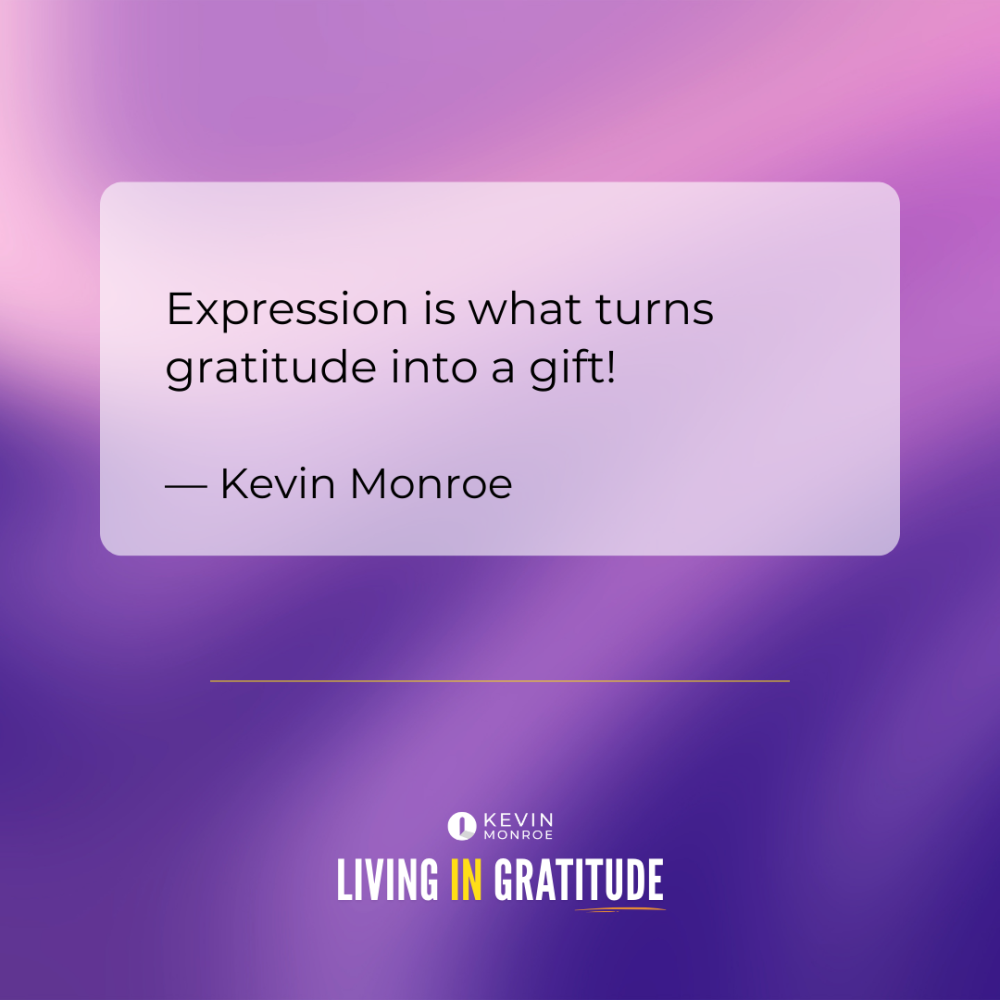
If gratitude stays trapped inside us, it never becomes fully alive. Expression is what turns gratitude into a gift.
5. Gratitude is better together.
Gratitude grows faster in community. It strengthens when it’s shared.
6. Gratitude shapes how we lead, not just how we feel.
It changes conversations. It changes culture. It changes the atmosphere around us.
7. Gratitude is how we return to ourselves.
When life gets loud, scattered, and fast… gratitude helps us come home.
A Gentle Invitation
If this language resonates, you’re already part of this. You don’t have to earn your way in.
And if it doesn’t resonate yet, there’s no rush. Gratitude doesn’t need to be forced. It needs to be welcomed.
So here’s my invitation as we close January:
Choose one statement from the manifesto and practice it this week. Not perfectly. Just honestly.
Maybe you pause long enough to notice something small. Maybe you express gratitude you’ve been holding back. Maybe you lead one conversation with a little more presence and care.
And if you want to, I’d love to hear what you choose.
Reflection Prompt (for you + your team)
What part of this mini-manifesto feels most true for you right now… and why?
And if you’re leading others:
Which statement do you want your team to live inside this year?
Closing
I’m grateful you’ve been here for January.
This isn’t content for me. It’s a practice for us.
And if Living IN Gratitude becomes a shared way of being, little by little… it will change far more than we can measure.
I’m grateful for you.
About This Series
This January series introduced Living IN Gratitude as a weekly practice for real life:
Gratitude as a way of being
Noticing what’s already present
Expressing what matters
Naming the posture we’re practicing together
This month we named it. Next month we'll practice it...in the life we’re living.
Join me here next week?

Gratitude Isn’t Complete Until It’s Expressed
Gratitude experienced is better than gratitude explained. And until you express it, you aren’t fully experiencing it. Living in gratitude isn’t only something we feel inside. It’s something we release into the world.
Have you ever felt deeply grateful for someone… and still not told them?
Not because you didn’t mean it. Not because you didn’t care.
But because life moved fast. And the moment passed.
That’s one of the quiet tragedies of modern life:
We feel gratitude… but we don’t always express it.
And unexpressed gratitude, over time, becomes a missed moment.
So this week, I want to offer a simple idea that has shaped my life:
Gratitude experienced is better than gratitude explained. And until you express it, you aren’t fully experiencing it.
Living in gratitude isn’t only something we feel inside. It’s something we release into the world.
The Difference Between Feeling Gratitude and Living It
Noticing is where gratitude begins.
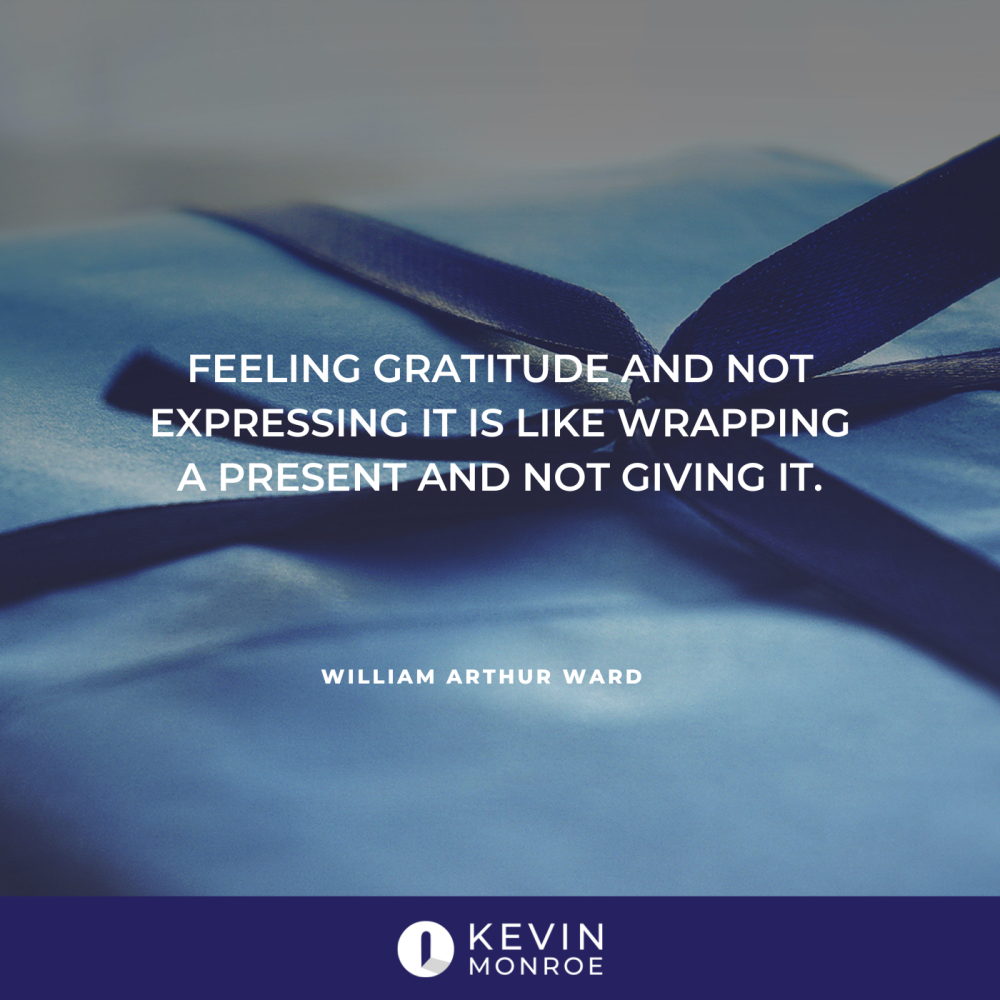
But expression is where gratitude becomes real.
Because gratitude that stays internal may warm your heart… but gratitude that’s expressed can change someone’s day.
It can repair a relationship. Strengthen a team. Restore dignity. Lift a burden you didn’t even know someone was carrying.
Sometimes the most meaningful gratitude isn’t dramatic. It’s specific. Timely. Human.
A simple and sincere sentence like:
“I see you.”
“Thank you for staying.”
“You mattered in that moment.”
“You helped me more than you know.”
Those words are not small.
They are anchors.
The Personal Lens
Let’s make this real.
Think of one person you’re grateful for right now.
Not someone you admire from a distance. Someone whose presence has mattered to you recently.
Maybe they:
encouraged you when you were tired
carried something you didn’t have capacity to carry
listened without trying to fix you
believed in you when you were unsure
Now ask yourself:
What do I appreciate about them specifically?
What moment do I remember most clearly?
What would I want them to know… if I didn’t overthink it?
And then… here’s the invitation:
Express it.
Text them. Call them. Write the note. Say it out loud.
Don’t wait for the “perfect time.”
Gratitude has a short shelf life if it stays trapped inside you.
The Team Lens
This matters just as much in leadership.
In many organizations, people work hard and rarely hear:
“I noticed.” “That mattered.” “I’m grateful for the way you showed up.”
And when appreciation is absent, something subtle begins to happen:
People don’t stop performing. They stop feeling seen.
Leaders, I want to offer you a question worth carrying into this week:
Who on your team has been quietly holding things together?
Not the loudest person. Not the most visible.
The steady one.
The one who keeps showing up. The one who absorbs pressure without asking for recognition.
And then:
Express gratitude with specificity.
Not flattery. Not generic praise.
Specific appreciation.
Because people can’t live inside vague affirmation.
But they can live inside a moment of being truly seen.
Why Expression Matters More Than You Think
There’s a ripple effect to expressed gratitude.
It doesn’t just encourage the person receiving it.
It changes the environment around them.
It softens tension. It strengthens trust. It increases resilience.
And in a world where many people are carrying more than they say…
gratitude becomes one of the most practical forms of leadership we have.
A Simple Practice for This Week
Choose one person.
Write one sentence.
Send it.
Here’s a template if you want it:
“I’m grateful for you because ______.”
Or:
“The moment I appreciated most was ______. It mattered because ______.”
Keep it simple. Keep it honest. Keep it human.
One Question to Sit With
As you move through this week, return to this question:
Who needs to feel my gratitude — not someday, but now?
Next week, we’ll take the next step: how living in gratitude becomes a way of being… especially when circumstances are unresolved.
For now, don’t underestimate the power of a single expressed moment.
I’m grateful for you. And I’m glad you’re here.

Noticing What's Already Here
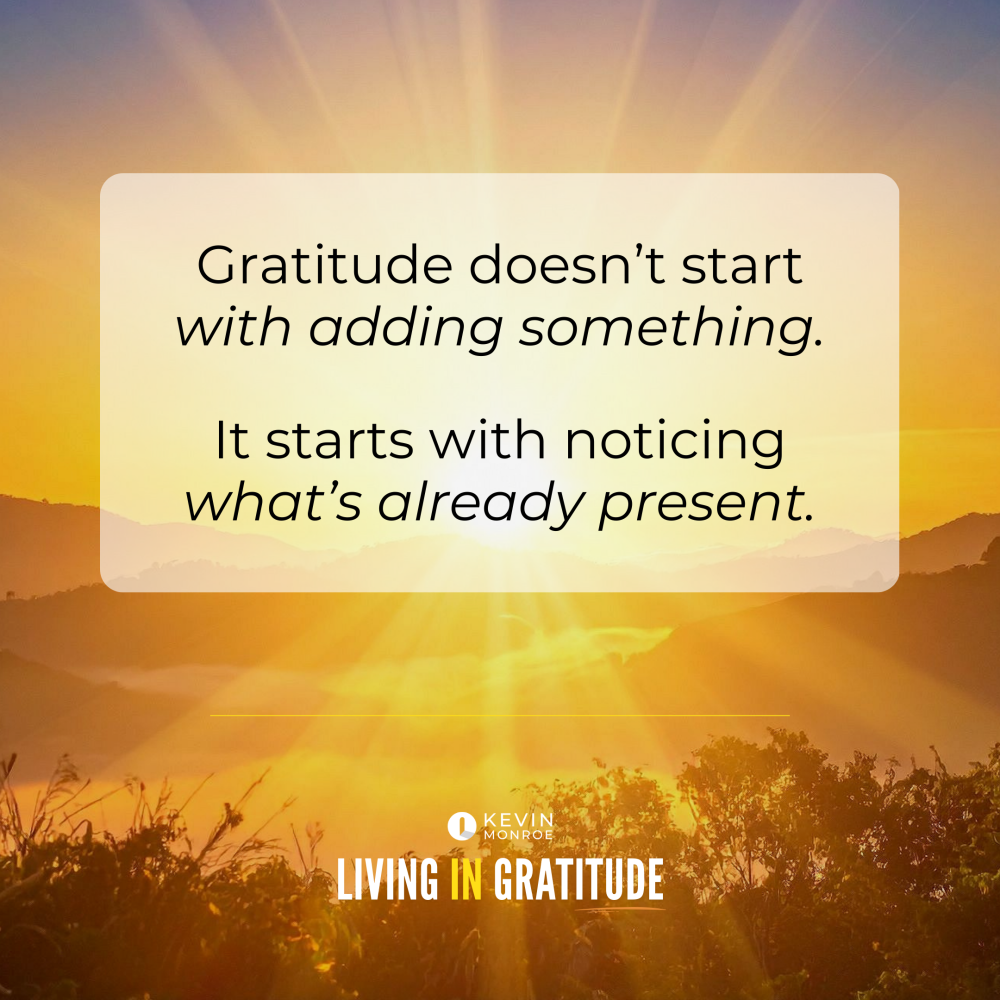
I’m inviting you to notice. Because living in gratitude doesn’t start with adding something. It starts with noticing what’s already present.
Do you ever notice that gratitude doesn’t disappear because you stop caring… but because life gets loud?
Not loud like chaos. Loud like pressure. Deadlines. Responsibilities. Decisions. People who need you.
And before you know it, your attention narrows.
So this week -- still early in 2026, I’m not inviting you to add anything new.
I’m inviting you to notice.
Because living in gratitude doesn’t start with adding something. It starts with noticing what’s already present.
The Quiet Power of Attention
Do your days start moving so fast it’s hard to keep up… let alone stay present?
Most of us know that feeling.
From task to task.
From conversation to conversation.
From one responsibility to the next.
And in the process, we can miss what’s quietly holding us up.
Not because we’re careless.
Not because we’re ungrateful.
But because sustained pressure does something to the human mind and heart:
It pulls our focus toward what’s missing, unresolved, or still ahead.
Gratitude invites us to widen our gaze again.Not by pretending things are better than they are — but by noticing what’s already present within the life we’re living.
What Noticing Really Is
Let me be clear about what I mean by noticing.
Noticing isn’t positive thinking. It isn’t denial. And it isn’t forcing ourselves to “look on the bright side.”
Noticing is an act of honesty. It’s the willingness to slow down long enough to see:
What’s supporting you
What’s steady, even if it’s quiet
What hasn’t collapsed, even under pressure
Sometimes what we notice is small.
A moment of kindness.
A conversation that steadied you.
A body that kept going.
A friend who checked in.
A door that opened at just the right time.
Gratitude begins there. Not with grand declarations — but with simple awareness.
The Personal Lens
Let’s bring this down to your real life.
Take a moment and ask yourself:
What have I been rushing past lately?
What has been quietly present that I haven’t taken time to appreciate?
What good thing has been in my life… that I’ve been overlooking?
You don’t need to make anything bigger than it is.
Just notice.
Because what we notice shapes how we interpret our lives. And how we interpret our lives shapes how we carry them.
The Team Lens
And this matters just as much in leadership.
Teams often operate under sustained pressure. Deadlines, demands, change, uncertainty. And when that happens, it’s easy to fixate on gaps, problems, and performance.
But noticing shifts the tone of leadership.
It helps us see:
Effort that doesn’t show up in metrics
Resilience that doesn’t announce itself
People who keep showing up, even when it’s hard
A simple question you might carry into your next conversation:
What’s already working here that deserves to be named?
Noticing doesn’t lower standards. It strengthens trust.
And it reminds people that they’re seen.
Why This Matters
Here’s why this is more than a nice idea:
Gratitude doesn’t require resolved circumstances. But it does require attention.
When we learn to notice what’s already present:
Our perspective steadies
Our nervous system softens
Our capacity for hope expands
Not because life suddenly changed — but because we did. This is the quiet work of living in gratitude.
A Gentle Practice for This Week
Once a day, pause long enough to name one thing you noticed that you might have otherwise missed.
No list required. No performance expected.
Just presence.
One Question to Sit With
As you move through this week, return to this question when you can:
What is already here that I’ve been overlooking?
Next week, we’ll explore what happens when gratitude doesn’t stay internal — and why it often asks to be expressed.
For now, noticing is enough.
I’m grateful for you. And I’m glad you’re here.

Living in Gratitude: Week One — An Orientation, Not a Resolution
We’re going to spend this season exploring what it means to Live IN Gratitude — how it shapes how we notice moments, how we carry pressure, how we lead people, and how we choose to show up when circumstances are unresolved.
A January Note: Naming the Invitation
For a long time now, I’ve called this the I'M GRATEFUL FOR YOU Newsletter and usually ended each week the same way:
I’m grateful for you.
I meant it then. I mean it now.
Those words have never been a tagline to me. They’ve been a posture — a way of staying human in a world that moves fast, demands much, and often forgets to pause.
As we step into a new year, I want to name something that’s been quietly forming underneath that phrase.
The invitation has always been more than expressing gratitude. It’s been about living in gratitude.
Not as a performance. Not as forced positivity. But as a way of being — especially when life is heavy, leadership is demanding, and clarity doesn’t come easily.
So as 2026 begins, this newsletter is gently evolving.
The heart remains the same. The gratitude remains personal. The relationship remains.
But the invitation is widening.
We’re going to spend this season exploring what it means to Live IN Gratitude — how it shapes how we notice moments, how we carry pressure, how we lead people, and how we choose to show up when circumstances are unresolved.
I’ll still say it often, because I still believe it deeply:
I’m grateful for you.
And I’m inviting you — as we begin this year together — to live in gratitude with me.
This Week’s Reflection: How Are You Arriving?
January has a way of asking questions before we’re ready to answer them.
How are you starting the year?
What are you carrying with you?
What feels hopeful — and what still feels unresolved?
Before plans, before goals, before intentions, I want to invite a gentler beginning.
Not how you wish you were arriving. Not how others expect you to arrive. But how you actually are.
Because gratitude isn’t something we add on later. It’s a posture we inhabit right where we are.
Even — and sometimes especially — when things are unfinished.
Gratitude as a Way of Being
When people hear the word gratitude, they often think of lists, practices, or moments of thankfulness.
Those have their place.
But Living IN Gratitude is deeper than any one practice.
It’s a way of seeing. A way of holding experience. A way of choosing presence over pressure, awareness over autopilot.
Gratitude doesn’t require resolved circumstances. It requires honesty.
It doesn’t ask us to ignore what’s hard. It helps us stay open inside it.
And over time, something subtle but powerful happens:
Our perception shifts. Our attention steadies. Our capacity for hope grows.
Not because life got easier — but because we learned how to carry it differently.
A Simple Invitation for This Week
As this year begins, I’m not inviting you to do more.
I’m inviting you to pause.
Just long enough to notice:
How am I really arriving into this year?
What am I carrying that deserves acknowledgment?
What feels quietly present — even if it’s small?
You don’t need to fix anything yet. You don’t need answers.
This week is simply about orientation.
Because how you arrive matters more than how fast you move.
One Question to Sit With
As you move through the days ahead, return to this question when you can:
What might it look like to live in gratitude right here — not later, not when things are clearer, but now?
Let that question work on you gently.
There’s no rush.
I’m grateful for you. And I’m glad we’re beginning this year together.

The Power of a Moment: What a Stethoscope Taught Me About Presence
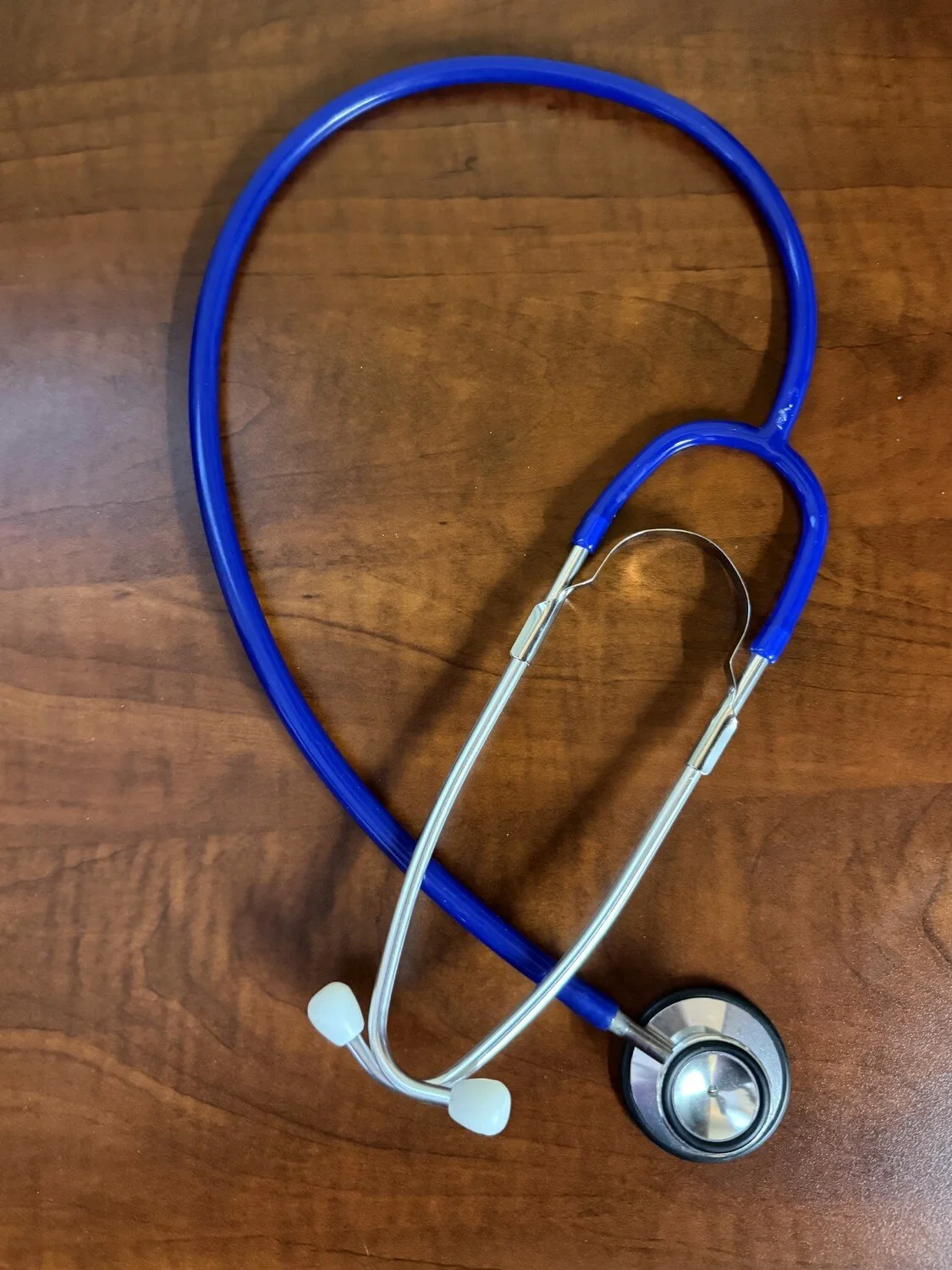
What do you see when you look at this stethoscope? Most people would see something disposable. Inexpensive. Easily replaced. But when I look at this stethoscope, I don’t see a tool. I see a moment — one that has stayed with me for nearly eighteen years.
𝙒𝙝𝙖𝙩 𝙙𝙤 𝙮𝙤𝙪 𝙨𝙚𝙚 𝙬𝙝𝙚𝙣 𝙮𝙤𝙪 𝙡𝙤𝙤𝙠 𝙖𝙩 𝙩𝙝𝙞𝙨 𝙨𝙩𝙚𝙩𝙝𝙤𝙨𝙘𝙤𝙥𝙚? ⬇️
Mom's Sethoscope
Most people would see something disposable. Inexpensive. Easily replaced.
But when I look at this stethoscope, I don’t see a tool. I see a moment — one that has stayed with me for nearly eighteen years.
I see February of 2008.
That was the month my mother was taken ill with what was soon diagnosed as acute respiratory distress syndrome (ARDS). She was admitted to the ICU through the ER in Perry, Georgia — the small town where I grew up.
I rushed to the hospital and camped out in the ICU.
At first, we thought she had pneumonia. But it quickly became clear that her condition was far more serious. She was struggling for every breath she took.
It was hard seeing Mom like this — bedridden and fighting for each breath. She was petite, barely five feet tall and just over a hundred pounds. Yet she was an absolutely formidable force.
Everyone in Perry knew Miss Peggy.
At eighty-three, she walked six miles a day and did aerobics three times a week.
Mom was also hard of hearing and didn’t wear hearing aids.
The next day, they arranged for a pulmonologist from the neighboring town to come see her.
The doctor’s name was Dr. Asad. I still remember his face. I can see it as I write these words.
He was kind, gentle, caring, and deeply compassionate. He spoke with my mother, explaining that he was going to have to intubate her. And understandably, she was scared. Between her labored breathing, her hearing loss, and his accent, she was struggling to fully understand what he was saying.
Then something small and extraordinary happened.
Dr. Asad paused and said, “Excuse me. I’ll be right back.”
He stepped out to the nurses’ station and returned with a stethoscope. This stethoscope. The kind provided in hospital rooms. The kind most people never think twice about.
He gently placed the earpieces in my mother’s ears and used the chest piece as a microphone. Slowly, carefully, he explained the procedure. What he was going to do. Why it was necessary. How he would take care of her.
For the first time, my mother could truly hear him.
Her breathing was still labored. The situation was still serious. But something shifted. Fear softened. Trust entered the room.
Then something even more extraordinary happened.
As Dr. Asad prepared for the procedure, I quietly watched him remove his pager and phone and place them on the nurse’s station desk.
He didn’t announce it.
He didn’t explain it.
He simply set them aside and returned to my mother.
He didn’t even know I saw it.
But those small, unspoken actions communicated volumes.
In that moment, nothing else mattered.
He picked up the stethoscope, explained everything again, asked if she understood and had questions, then intubated her.
A few minutes later, he returned to check on her.
That’s when I stopped him.
I told him what I had seen and what it communicated to me. That in that moment, my mother’s care was the most important thing in the world to him. The only thing receiving his attention.
He smiled, chuckled, and said it cost him a missed stock tip. Then he shrugged it off and went on his way.
But he didn’t stop caring.
Every time Dr. Asad came to see my mother, it was with that same level of presence, compassion, and connection. I thanked him again and again. I even asked once if it was okay to hug him. It was.
Later, I wrote him a letter to express my gratitude.
So when you look at this stethoscope, you may see a five-dollar object.
I see something priceless.
Because that one encounter left an indelible mark on my life.
It taught me the power of a moment. A moment when a healthcare professional slows down long enough to truly connect. Not clinician-to-patient, but human-to-human. Heart-to-heart.
Moments like that don’t end when the room clears or the shift changes. They ripple. They shape how we remember. How we lead. How we care. How we choose to show up when pressure is high and time feels scarce.
Eighteen years later, that moment is still working on me.
Not because it was dramatic. But because it was deeply human.
And it reminds me that the moments we create today may carry far longer than we ever imagined.
A Reflection for You
As you sit with this story, I invite you to pause and reflect:
What moment has stayed with you longer than you expected?
Who showed up for you with presence when it mattered most?
And where might your presence create a moment that quietly ripples forward?
Sometimes the most meaningful impact doesn’t come from doing more — but from being fully present right where you are.
To every healthcare professional who takes the time and has the heart to connect human-to-human and heart-to-heart: you may never fully know what those moments create in the minds and memories of the patients you serve — and their families.
I’M GRATEFUL FOR YOU.

Moment Makers: Leading with Gratitude, Hope and Heart
Have you ever paused long enough to notice the power of a single moment? This article is an invitation. Not to a program. Not to a checklist. But to a movement.
This post was written in joyful collaboration with Darlene Cunha MMHC, BSN, CENP-RN, WCS Caritas Coach, CSSBB.
Have you ever paused long enough to notice the power of a single moment?
The kind that shifts a conversation, lifts a spirit, or restores someone’s sense of worth. In healthcare, it's easy to race past these moments. But what if you didn’t?
What if you chose to lead differently - not just with strategy and metrics, but with heart?
This article is an invitation. Not to a program. Not to a checklist. But to a movement.
A movement of leaders who choose to lead with gratitude, hope, and presence. Leaders who understand that transformation doesn’t always come from sweeping change. Movements often begin with a micro-moment.

Gratitude: A Strategic Leadership Skill
Gratitude isn’t fluff. It’s fuel. It’s not a nicety, it’s a necessity.
Neuroscience confirms what many of us have felt intuitively: gratitude rewires the brain for resilience, connection, and creativity. It strengthens relationships. It builds trust. It creates cultures where people feel safe enough to speak up, show up, and stay. In healthcare, where burnout and moral injury are real, gratitude is a lifeline. When leaders model gratitude, they don’t just boost morale—they change the climate. They shift the energy in the room. They make people feel seen.
Try this: At the end of your day, ask yourself: Who made a difference today? Did I tell them?
Micro-Moments: The Hidden Power of Presence
We’ve all had them. Moments when someone looked us in the eye and really saw us. When a colleague paused to say, “I'm grateful for you.” When a leader noticed our effort and named it out loud.
These are micro-moments. They may be small, but in reality, they’re seismic. They create belonging. They build bridges. They remind us that we matter. Leaders who become “moment makers” don’t wait for the perfect time. They seize the moment in front of them. They pause. They notice. They express.

A Simple Practice: Pause. Notice. Express.
What if you begin adopting this simple practice—you can do it in a matter of seconds, and yet it makes a world of difference.
Pause long enough to be present.
Notice what’s good, what’s working, who’s trying.
Express appreciation - out loud, in writing, or with a gesture.
Hope: The Foundation of Flourishing
Hope isn’t wishful thinking. It’s a leadership imperative. Hope fuels perseverance. It sparks innovation. It heals. In healthcare, hope is often the first casualty of stress, bureaucracy, and exhaustion. But leaders can restore it. Not by pretending everything is fine—but by naming what’s hard and pointing to what’s possible. Hope is contagious. When leaders carry it, others catch it.
Reflect on this: What gives you hope today? How can you share that hope with someone else?
Gratitude + Hope = Human Flourishing
Gratitude and hope aren’t just emotional states. They’re strategic tools. Together, they create conditions for human flourishing. They help people rise. They help teams thrive. And they’re not abstract. They’re actionable.
Tool to try: The Daily Gratitude Examen. At the end of each day, reflect:
Where did I see goodness?
Who made a difference?
What am I grateful for?
What do I hope for tomorrow?
Community and Connection: The Invitation
This is a movement. Not a moment. Not a trend. It’s a way of leading that centers humanity. That honors dignity. That builds connection. We’re inviting you to join us. To become a moment maker. To lead with gratitude. To spark hope. To create micro-moments that matter.
Will You Be a Moment Maker?
In healthcare, leadership isn’t just about strategy, it’s about heart. It’s about noticing the moments that matter and choosing to lead with gratitude and hope.
Micro-moments - those small, intentional acts of presence—can transform teams, cultures, and lives.

Join Us
We’re inviting you to join the movement. Start today: Pause. Notice. Express.
Start a gratitude habit.
Share a micro-moment.
Invite your team to reflect together.
Let’s lead with heart and make moments that matter.
Will you be a moment maker today? Who knows the impact it will have...
I hope you know, I'M GRATEFUL FOR YOU!
#GratitudeLeadership #HopeInHealthcare #MomentMakers

The Hope Gap: Why Motivational Tactics Aren't Working
Something is different. You know it, but you might not be able to put your finger on it or label it. It seems that people are now resistant to "tricks of the trade" that you could once rely on to 'motivate the troops' and get people excited and engaged. So what’s changed?
May I be candid with you? For the past five years, we are all navigating new territories and terrains. Most likely, your strategic plan did not forecast even half of the challenges you've navigated these past five years.
Almost halfway through 2025, the chaos and uncertainty continue…and they are taking a toll. On you, the people you lead…and the people they love and want to provide for.
You know the truth of Bob Dylan's now 60-year-old song, The Times They Are A-Changin'.
Something is different. You know it, but you might not be able to put your finger on it or label it. It seems that people are now resistant to "tricks of the trade" that you could once rely on to 'motivate the troops' and get people excited and engaged.
What's Changed?
Earlier this year, the Gallup Organization named it. They called it The Hope Gap. Their research revealed what many have felt but few have articulated: What followers want most from their leaders isn't motivation, inspiration, or even purpose—it's hope.
Maybe this helps explain what's happening in your organization…with your team….the people entrusted to your care.
When hope is depleted, traditional motivation tactics don't just fail—they often make things worse.
The Hope Gap Is Real
The numbers are striking:
64% of workers want leaders who instill in them a sense of hope (Gallup).
Employees with the highest levels of hope are 74% less likely to suffer from burnout (meQ).
Leaders who inspire hope get 68% MORE engagement.
But here's the critical insight that most leaders miss: When hope is depleted, your well-intentioned efforts to motivate may actually be widening the gap rather than closing it.
Why Your Current Approach Might Be Widening the Gap

A leader noticed engagement dropping across the organization. His response? Gather the troops and share an uplifting message about overcoming challenges in the past, assuring them that we will get through this storm together. Everybody left with a logoed Yeti tumbler.
Many employees left bewildered, confused, and deflated. Why?
Because when people are experiencing hope depletion, motivational approaches feel disconnected from their reality. The gap between leadership's enthusiasm and employees' lived experience becomes evidence that leaders don't understand what's really happening.
Hope Science: What Actually Works
Before diving into specific approaches, we need to understand what hope actually is—not as a vague feeling, but as a cognitive-motivational system studied extensively by psychologist C.R. Snyder and others.
Hope consists of three essential elements:
1. Achievable Goals Not distant "BHAGs" (Big Hairy Audacious Goals) that feel disconnected from daily reality, but meaningful objectives that balance challenge with attainability.
When hope is depleted, people need proximal goals—achievements they can reach this week, this month. They need to experience progress before they can envision grand futures.
2. Pathways Thinking The belief that multiple routes exist to reach those goals. When one approach fails, alternatives are available.
Hope-depleted individuals often exhibit "tunnel vision"—seeing only one way forward (that isn't working) rather than multiple possibilities.
3. Agency The belief that your actions matter—that you can affect outcomes through your efforts. And importantly, the willingness to take those actions.
This is where traditional motivation most often fails: it attempts to inspire action without rebuilding the belief that those actions will make a difference.
Common Hope-Depleting Leadership Approaches
When leaders don't understand these principles, well-intentioned efforts often backfire:
Raising the stakes ("This quarter is make-or-break!") when people need achievable wins.
Pushing harder ("Just give 110%!") when pathways, not effort, are the issue.
More inspirational talks when what's needed is evidence that action leads to results.
Contests and rewards that further overwhelm already stretched resources.
New initiatives that signal prior efforts (and investments) didn't matter.
A Hope-Building Alternative
Consider instead how hope science might reshape leadership approaches:
Instead of a new ambitious vision: Break down large goals into visible weekly progress markers. Celebrate these small wins publicly.
Instead of more motivational speeches: Create structured time for teams to identify multiple approaches to current challenges. Help them expand their pathways thinking.
Instead of higher targets: Provide concrete evidence of how specific team actions have directly influenced outcomes. Build the belief that effort connects to results.
Instead of another engagement initiative: Address the specific patterns of hope depletion present in your organization.
Understanding Before Intervening
And that brings me to a crucial point:
Hope building must begin with a proper diagnosis, not just treating symptoms.
Effective leaders must identify the reasons behind hope depletion before trying to restore it, just as responsible physicians diagnose conditions before prescribing medication.
Different team members experience hope depletion differently. Some have lost faith that their efforts matter. Others see no alternative pathways forward. Still others can't connect daily work to meaningful outcomes.
Applying the wrong solution to the wrong pattern of depletion doesn't just waste resources—it can actively damage trust.
Navigate This New Territory With Confidence
What if you could get a map of this new territory that would inform your strategy and approach? You can.
We've developed The Hope Compass, an assessment for teams and individuals to identify current hope depletion and provide insights and strategies to foster hope.
For leaders with teams of 7 or more: I invite you and your team to complete The Hope Compass. This practical tool requires just 15 minutes per person and reveals the specific hope depletion patterns affecting your team. Simply have team members complete the assessment within one week. When we reach 75% participation, we'll create a report to share findings and tailored hope-building strategies for your team.
We're looking for 5-7 leaders and teams to complete The Hope Compass this month. Do YOU want to be one of those?
Send me a DM or complete this short survey to express your interest.
In a world where hope is the top desire of followers, leaders who can cultivate hope—not just motivation—will foster genuinely engaged teams.
I AM GRATEFUL FOR YOU!

Embracing Hope: A Defiant Stand Against Cynicism (Part 2)
If embracing hope is an act of defiance, then what exactly are you defying? In a world increasingly characterized by doubt and despair, choosing hope challenges the dominant narratives of our time.
If embracing hope is an act of defiance, then what exactly are you defying?
In a world increasingly characterized by doubt and despair, choosing hope challenges the dominant narratives of our time. Hope stands in stark contrast to the increasing cynicism that pervades our society—a cynicism that has been systematically reinforced, almost as if it were our best defense against disappointment.
The Weaponization of Cynicism
Information Overload: We're inundated with news of disaster and disappointment, fostering helplessness and hyper-vigilance.
The "Realism" Trap: We're told that to "prepare for the worst" is to be wise, viewing hope as naive and urging a retreat from ambition and aspiration.
Burnout and Emotional Fatigue: Years of collective adversity have shifted many from battle-ready to battle-weary, making cynicism seem like a natural refuge.
Despite the sway of these forces, hope becomes a bold resistance, a neurological uprising against the inertia of despair.
Hope as a Radical Act of Defiance
Choosing hope isn't about ignoring reality—it's about navigating it with resilience and imagination. It's about engaging in:
Hope as Resistance: Your Neurological Revolt
Science shows that choosing hopeful narratives:
Rewires the brain’s threat detection system, empowering the prefrontal cortex over the amygdala.
Creates "stress inoculation"—mental PPE that strengthens you in times of crisis.
Fuels solution-finding neuroplasticity, counteracting the effects of burnout on the brain.
Just as Shakespeare wrote "Hamlet" amidst the plague, warrior hope confronts reality head-on while scripting new possibilities.
The Gratitude Armory
Your greatest ally in this battle against cynicism and despair? Appreciation activates the brain’s seek-and-savor system (dopamine pathways), filtering your environment for evidence against despair.
Here are two practices to enhance your warrior stance:
1️⃣ The Evidence Collection
Chronicle daily proof that hope is warranted: projects advancing, problems being solved, and positives often overshadowed by negativity.
Keep a "Hope Evidence Log" to revisit when cynicism strikes.
Invite others to join you in sharing the Evidence Log so it becomes a shared practice.
2️⃣ The "And Yet" Practice
Acknowledge challenges, then pivot: "Yes, this is tough. And yet...a) Here's the good I can still find, or b) Here's a small action I/we will take to navigate our way forward rather than giving up."
This reframing empowers you to engage actively with possibilities instead of passively accepting circumstances.
Embracing hope isn't indulging in Pollyanna positivism. It's transformational leadership, grounded in optimism and actionable insight.
Stay hopeful, stay defiant, and continue transcending limits. You embracing HOPE will inspire someone else to embrace it too.
HOPE IS A WARRIOR EMOTION for those who refuse to believe our best days are somewhere in the past.
Let us dare to hope fiercely, for in that defiance lies the seed of true transformation.
I AM GRATEFUL FOR YOU!

Hope as the Warrior Emotion: Part 1
Have you ever been accused of “𝗯𝗲𝗶𝗻𝗴 𝘁𝗼𝗼 𝗵𝗼𝗽𝗲𝗳𝘂𝗹” -- as if being hopeful is naive or foolish?
In our cynical world, hope is often dismissed as passive wishful thinking or blind optimism. We've been taught that "hope is not a strategy" and that "realistic" people prepare for the worst while hoping for the best.
Have you ever been accused of “being too hopeful” —as if being hopeful is naive or foolish?
In our cynical world, hope is often dismissed as passive wishful thinking or blind optimism. We've been taught that "hope is not a strategy" and that "realistic" people prepare for the worst while hoping for the best (with emphasis on the preparing, not the hoping).
But what if we've fundamentally misunderstood hope?
Musician Nick Cave offers a perspective that stopped me in my tracks:
Unlike cynicism, hopefulness is hard-earned, makes demands upon us, and can often feel like the most indefensible and lonely place on Earth. Hopefulness is not a neutral position. It is adversarial. It is the warrior emotion that can lay waste to cynicism.
This framing transforms everything. Hope isn't gentle surrender—it's fierce resistance.
True hope doesn't ignore problems or challenges. Instead, it acknowledges them fully while refusing to grant them permanence or ultimate authority. It's the deliberate choice to see beyond current circumstances without denying their reality.

Look around your workplace – cynicism has become the default position in many organizations. And often with good reason: broken promises, failed initiatives, superficial positivity that ignores real problems.
Yet amid legitimate disappointments, warrior hope stands in stark contrast from toxic positivity. It doesn't deny what's broken; it simply refuses to believe that brokenness gets the final word. It's the courage to say "nevertheless" when all evidence points to impossibility.
During your darkest moments—whether personal crisis, organizational challenge, or societal turmoil—hope becomes an act of defiance. It's your refusal to let cynicism have the final word.
This warrior perspective helps explain why gratitude and hope work so powerfully together. Gratitude isn't just warm appreciation; it's evidence-gathering that builds your case against despair. Each moment of gratitude becomes ammunition in hope's arsenal.
Personal Invitation + Application
What happens when you reframe hope this way in your own life?
Where might you need to adopt this warrior stance rather than surrendering to the "realistic" voice of cynicism?
Maybe next week, I'll upack specific practices for developing this adversarial hope and the surprising science behind why it works.
Until then, I'd love to hear: Where have you witnessed or practiced this warrior form of hope?
Here's me riffing on Hope as the Warrior Emotion on a Hope Daily Pulse. I'm creating new shorts every day for 21 days. Please watch for these here on LinkedIn.
Here's where you can watch Nick Cave unpack "The Warrior Emotion" on The Late Show with Stephen Colbert.
I'M GRATEFUL FOR YOU... and for HOPE!

What Happened To Gratitude? A Public Service Announcement
Did you know that Hope Science is a thing? It's been around since the 80's!
🚨 We interrupt our usual programming to bring you this Public Service Announcement. 🚨
What Happened to Gratitude? Yes, I've been asked that question. I made it clear in one email 🤭.
There's a leadership lesson right here...Don't miss it! Have you ever assumed that because YOU said (or wrote) something ONCE...that everybody on your team got the message? I really did mention this in ONE email. Now, I'm dedicated this edition of the IGFY Newsletter to the topic.
For everyone who's been wondering where gratitude fits in with all this talk about HOPE—breathe easy. My commitment to gratitude hasn't wavered one bit! If anything, it's stronger.
You see, we've always intertwined hope with gratitude in our work. At every Gratitude Encounter, you’ll hear me say, "HOPE grows IN Gratitude." That’s not just a catchy phrase—it's a principle that's deeply rooted in Hope Science.
Speaking of missing things...did you know that Hope Science is a thing? It's been around since the 80's.
Enter Hope Science
Here are the core tenets of C.R. Snyder's Hope Theory:
Goals: Snyder and his colleagues began with the assumption that human actions are goal-directed. Goals should be meaningful, whether short- or long-term, to inspire your imagination and motivate action. Goals don't always have to be Big Hairy and Audacious (BHAGs); overly ambitious goals can feel unreachable and unattainable. In Hope Theory, hope flourishes when you believe a goal is attainable. Breaking goals into actionable steps can help you find clarity in chaos.
Pathways Thinking: It's great to have goals. To have hope, you must also believe you (and your teammates) are capable of finding or creating workable routes to those goals. High-hope people and leaders believe there are multiple ways to "get there". And, if we encounter obstacles (which YOU will), you are capable of finding an alternate path. Rerouting is what your GPS calls it.
Agency Thinking: This is absolutely essential to the science of hope. Believing in your ability to act and navigate multiple pathways to achieve your goal and reach your destination. In other words -- WHAT YOU DO MATTERS! You can affect your situation.
Hope is not just a feeling...it's a powerful resource. Actually, it's a leadership skill. One you need to be mastering now.

Why Hope Matters [More] Now
As 2025 unfolded—or perhaps unraveled is the better word—you might be feeling the weight of uncertainty more than ever.
For me, it began with an email I received on January 4 from Andre Haddad, CEO of Turo following the horrific events in New Orleans and Las Vegas that coincidentally involved cars rented from Turo.
His words lodged in my heart: (I'm quoting from an email received on January 4).
2025 is off to an awful start. While I mourn today, I also remain committed to pioneering and sustaining a strong, secure, trustworthy marketplace for tomorrow.
Maybe you felt that sentiment resonate deeply.
By the end of February, I noticed people everywhere losing hope, teetering on the brink of despair. Maybe you've noticed it, or even felt it yourself. The Gallup Organization confirmed what many of us were sensing: their February 11 Global Leadership Report revealed that HOPE is what followers want most from their leaders now, with 56% of responses linking directly to hope.
This is where Hope Science becomes relevant, even vital, for you as a leader.
You don't just survive challenges—you innovate your way through them.
Think about it: When your team believes their goals are attainable, when they understand there are multiple ways to succeed (like that GPS that calmly announces "rerouting" when you hit an obstacle), and when they genuinely believe their actions make a difference—that's when transformation happens. That's when innovation thrives. That's when resilience becomes not just a buzzword, but a lived experience.
This isn't just about feeling better—it's about leading better.
In a world where uncertainty seems to be the only certainty, understanding and applying Hope Science might be the most practical leadership strategy you can employ.

Your Leadership Invitation
So, leaders, let me ask you:
How is hope trending on your team right now?
If it's low, recognize that this is a leadership imperative. Hope isn't a "nice-to-have"; it's essential for navigating these turbulent times.
If you need help boosting hope in your leadership or within your team, reach out. Here are a few ways I can assist:
Consultation: I'll work with you and your team to assess hope levels and develop hope-building strategies tailored to your situation.
Customized Journeys: Together, we'll create a personalized hope and gratitude journey for your leaders or team members.
Keynotes & Workshops: I offer engaging keynotes, interactive workshops, and can facilitate off-site events to inspire and equip your team.
Remember, as Napoleon Bonaparte said:
"A leader is a dealer in hope."
And as Norman Cousins wisely noted:
"The capacity for hope is the most significant fact of life. It provides human beings with a sense of destination and the energy to get started."
Let's ensure you're leading with hope—it's the energy needed to get started and the momentum to keep moving forward.
Ready to cultivate hope together?
Send me a message in my LinkedIn! Let's navigate this journey—Hope-Focused and Gratitude-Fueled—together.
I'M GRATEFUL FOR YOU!

Special Edition: Hope Is a Strategy—The Science of Leading with Purpose
Have you ever dismissed hope as mere wishful thinking? Or worse—declared “Hope is not a strategy!” only to watch your team’s energy deflate? If so, this edition of the IGFY Newsletter is for you.
Have you ever dismissed hope as mere wishful thinking? Or worse—declared “Hope is not a strategy!” only to watch your team’s energy deflate?
If so, this edition of the IGFY Newsletter is for you.
After reading this, I hope you’ll never say anything as asinine as “Hope is not a strategy!” again. (Yes, I said it.)

The Science of Hope: What Leaders Need to Know
Gallup’s latest research reveals that hope is what people most want—and need—from their leaders today. Yet many dismiss it as “soft” or “unquantifiable.”
Here’s the truth: Hope is a science, studied for over 40 years. And it’s not just about optimism—it’s a measurable skill that fuels creativity, productivity, and even profitability.
C.R. Snyder’s Hope Theory: The 3 Cornerstones
The late psychologist’s research shows genuine hope isn’t passive. It’s built on three pillars:
Goals: Clear, meaningful targets that inspire direction.
Pathways: The ability to identify multiple routes to overcome obstacles.
Agency: The belief that your actions matter and can create change.
Leaders who foster these three elements don’t just inspire—they unlock their team’s potential to innovate, adapt, and thrive. 🤷🏼♂️ Skills that are highly prized now!
Why Hope Matters in Business
In a world often focused on tangible metrics and outcomes, hope offers an invaluable yet often overlooked dimension of leadership. By understanding and harnessing the power of hope, you can unlock transformative benefits that don't just uplift individuals but drive entire organizations forward. Here’s why hope is essential for business success:
Enhanced Performance: Studies have shown that individuals with higher hope levels tend to perform better in their roles. They are more proactive, set meaningful goals, and are committed to achieving them.
Resilience in Teams: Hope fosters a resilient mindset. Teams grounded in hope are better equipped to handle setbacks, view challenges as opportunities, and maintain momentum toward collective goals.
Creative Problem-Solving: Hopeful individuals are skilled at envisioning multiple pathways to success, which encourages innovation and adaptability within organizations.
Increased Engagement and Morale: Cultivating hope leads to higher employee engagement, improving morale and reducing turnover rates. Employees feel more connected to their work and the organization's mission.
Yet most workplaces focus only on what’s easily measured—productivity, KPIs, profits. What if nurturing hope is the missing link to sustainable success?
How to Lead with Hope
Reframe “Hope” as a Strategy: Replace vague optimism with Snyder’s science—set clear goals, map pathways, and empower agency.
Share Hope Stories: Highlight team members who turned challenges into opportunities through action. (Join our first Hope Stories Lives this Friday to see this in action.)
Cultivate Hope Daily: Small, consistent practices build momentum.
Your Invitation: Grow Hope with Us
If you’re ready to turn hope into a leadership superpower, join our next cohort:
Cultivating Hope: A 21-Day Transformative Journey Starts Monday, May 12 | Join Here
This isn’t a “think positive” program. It’s a science-backed experience to help you and your team:
Reignite purpose in uncertain times
Build actionable pathways through challenges
Strengthen agency to drive meaningful progress
Final Thought
Hope isn’t the absence of struggle—it’s the belief that struggle can lead to growth. As leaders, you don’t just need hope. You have a responsibility to model it.
Stop dismissing hope; start leveraging it.
I'M GRATEFUL FOR YOU!